Showing posts with label Belgium. Show all posts

Thursday, October 9, 2014

The Story of Westmalle Brewery


Westmalle monastery, which is located in the town of Westmalle, Belgium, became a Trappist abbey in 1836.  That same year, abbot Martinus Dom started construction of a small brewery. Later that year, the first Westmalle Trappist beer was served!  Not bad to be a monk, dedicate your life to everything that involves, and get to drink wonderful beer brewed where you live!  Sometimes I feel like I was born in the wrong place at the wrong time.  Actually, I feel like that a lot of the time.  There is so much cool history out there that would have been right up my alley.

After 20 years of only brewing for themselves, the monks decided to occasionally sell very small quanitites of their sweet nectar at the gates of the monastery.  Of course, demand increased, and this resulted in brewery expansions in both  1865 and 1897.  In 1921, the beer from Westmalle was first offered in the general marketplace.  Again, demand increased, and a new brewery hall, yeast room, and workshop were constructed.  Since that time, Westmalle has been a leader in environmental and safety standards, and their beers have been highly influential.

In 1968, a water treatment plant was obtained, long before any law required it, to return water to the environment in a clean state.  This is pretty amazing to me, considering how little thought was given to environmental impact, in general, at the time.  They were way ahead of the curve, and continue today to be a role model in the brewing industry.

Westmalle beers include only water, barley malt, yeast, hops and sugar.  The water is sourced from a well on the property (what else would you expect?). The yeast is a proprietary strain that is cultured by the brewery (of course), and brings a spicy, floral aroma.  The hops used are whole cone, which is different than most breweries, which use pellets or liquid extract.  The sugar is Belgian candi sugar.  This sugar is fully fermentable and gives the beer a lighter body than one would expect (I agree.  I'm drinking the Dubbel right now, and I was definitely surprised that this beer wasn't a lot sweeter).  All of these things add up to make a Westmalle taste like only a Westmalle can.

Westmalle produces only three types of beer, and only two are available to the public.  Westmalle Extra is a 4.8% ABV beer brewed just for the monks for lunch time. Again, I think these guys don't have it too bad.  Westmalle Dubbel is 7% ABV and dark, reddish-brown beer that undergoes a secondary fermentation inside the bottle.  It pours with a creamy head, has a spicy and floral aromas in the glass, and tastes rich and complex, with a fruity flavor and surprisingly bitter finish, which feels dry in the mouth for quite a while.  It's very different than other Dubbels I have tried.  Westmalle Tripel is a clear, golden beer that also undergoes secondary fermentation in the bottle, and packs a punch (albeit sneaky) with 9.5% ABV.  This beer is fruity to smell, creamy in the mouth, and has a much softer feel to it.  Sometimes referred to as "The Mother of all Tripels," this beer was first brewed in 1934, and the recipe has stayed almost unchanged since 1956.  I guess when you have been brewing one sensational beer, consistently, for over 50 years, you end up with titles like "The Mother of all Tripels."

In 2000, Westmalle obtained a new bottling plant, further ensuring the quality of their beer.  The was around the same time the new maturing cellar was complete (pictured to the right).  The underground maturing cellar provides almost ideal conditions for secondary fermentation. And like before, strict attention was paid to the working conditions and environmental impact when the site was built.

In 1998, Brother Thomas, who was the recently retired head brewer of Westmalle, acted as the technical advisor for the revival of brewing at Achel, another Trappist monastery.  Westmalle's influence can further be felt by the Westmalle yeast he brought with him.  Basically, Westmalle does a few things, and they do those things very well.  I think there is something to be said for that.  We don't need to get our fingers in everything, and do a lot of things pretty well.  Better to be really good and one thing, and keep life a little simpler.  Westmalle is an excellent example of success in simplicity.  

Check out their beers.  They are pretty easily obtained anywhere you can find some specialty beers.  They are good now, they age well when properly stored (mine says best by 06/03/16), and they come in a handy 75 cl bottle size. Perfect for sharing with a friend (or drinking by yourself and writing this article).  Cheers, and enjoy everyone!

Brouwerij Der Trappisten Van Westmalle
Antwerpsesteenweg 496
B-2390 Westmalle
Belgie




Tuesday, August 5, 2014

The History of Orval Brewery

Abbaye Notre Dame D'Orval
Abbaye Notre Dame D'Orval is located in the southern Belgium province of Luxembourg, and is one of Belgium's six Trappist beer producers.  Currently, there are only ten monasteries - six in Belgium, two in the Netherlands, one in Austria, and one in the United States - that brew beer and sell it as "Authentic Trappist Product."  What does this mean?  A few things:

  1. They are produced within the walls of the monastery
  2. The monastic community determines the policies and provides the means of production
  3. The profits are primarily intended to provide for the needs of the community or for social services
Look for this logo on the label of the bottle
I think these are all pretty interesting facts about what makes a "Trappist" beer. I especially enjoy the fact that these monasteries are doing something good with the profits from their beers sales, and helping out their community.  I see this idea continuing today in the American craft beer scene, and I think this is a wonderful thing.  There is plenty of money to make a living, and give back to the community where you make that living.  


The name "Trappist" originates from the La Trappe abbey located close to the village of Soligny in Normandy, France, where this reform movement of the Cistercian Order of the Strict Observance was founded in 1664.  Trappist beer is not a style, but there are some common characteristics that almost all Trappist beers share.  They are all top fermented.  They are all unpasteurized. They contain no chemical additives.  They add sugar to the wort in the kettle, and they are bottle conditioned.  Basically, these guys are serious about how how they live and what they do.  No messing around.  Although all this information would lead you to believe Trappist beers have been around for a long time, Trappist beers as they are now produced have only existed since the early 1930s, when Orval and Westmalle developed their first commercially available beers.

The trout with the ring in its mouth
The Abbaye Notre Dame D'Orval gets its game from a legend in which the widowed countess Mathilda of Tuscany accidentally dropped her wedding ring into a spring on the site of the future abbey and assumed it was lost.  She prayed to God for the return of her ring, promising to build a great abbey if she should see the ring again.  Within moments a trout swam to the surface with the ring in its mouth.  She is said to have exclaimed "This place truly is a 'val d'or,'" meaning "golden valley," and established a church on the site known as Orval.  The trout with the ring in its mouth remains the symbol of the abbey. Now, is this story true?  Who knows, but I like it, and I'm betting you do too. Beer drinkers like a story to go with their beer, and this one is as good as any.


The abbey has suffered many set backs, including:  a major fire in 1252 and burning and looting during the French Revolution in 1793.  Slowly, it was rebuilt, and in 1931, a brewhouse was installed to help finance the rebuilding process.  Although a brewery was probably always present in the abbey, it wasn't until the 1930s that Orval distinguished itself as a brewery.


Orval makes only two beers, and only one makes it out of the monastery, the beer simply named "Orval."  The beer comes in at 6.9% ABV, but with a unique taste due mainly to the yeast strains used, and the dry-hopping with fresh Hallertau, Styrian Goldings, and French Strisselspalt hops.  Unlike other Trappist beers, this honey-colored pale ale is partially carbonated, then bottled with a small dose of priming sugar and a blend of yeast, including the "wild" yeast strain Brettanomyces, which gives it a phenolic, estery character.  This flavor is often described as "horse blankets," and becomes more apparent after 6 months.  So, this beer is hoppy and fresh when young, and becomes much more complex as it ages in the bottle.  I have one in my refrigerator that was bottled on November 28, 2013, and says it is best by November 28, 2018.  I'll go out on a limb and say I don't think this particular bottle will be around that long!

Cheers!

Orval, n° 2,
B-6823 Villers-devant-Orval
Tel: +32 61 311 261
brasserie@orval.be
www.orval.be/en/


Wednesday, May 7, 2014

Rochefort Trappist "10"


I came to read about and desire this amazing Belgian Ale when I was checking out the Merchant du Vin website not long ago.  Here's what stood out to me and made me realize this was something I needed to try:

Ratebeer.com - 100pts
"Best Beer in the World" - Men's Journal Magazine, October 2010
Gold Medal - World Beer Championships 2004, 2006

Those kind of reviews are enough for me to try just about anything, let alone a Belgian Trappist ale. Lucky for me, there was one left on the shelf when I was at the store the other day.  
(inside the Rochefort Brewery)
The minute I popped the top, the spicy aromas hit my senses.  I didn't even think I was close enough to the bottle to really notice it like that, but this thing came out swinging.  An excellent start. The beer poured a dark, walnutty brown, with leftover sediments from the bottle conditioning filling the glass as well.  The beer hits your lips with a distinct taste of well ripened raisins.  It is sweet, but well balanced by the malts.  The longer it warms up in the glass, I get more aromas of port wine.  The longer it sits in my mouth, I get a taste of warm caramel.  For a strong ale, at 11.3%, it goes down very smooth. Not much of that alcohol taste left in your mouth.  This beer is like perfectly prepared dessert: sweet, deeply satisfying, and you hope you will get it again one day.  A beer like this doesn't come around often, but when it does, savor it.  In case you were curious, the "10" on the label of the beer comes from "Belgian Degrees," a traditional, historical way of measuring gravity (the sweetness of the wort before fermentation), and determining the final gravity of the beer.
(Abbaye Notre-Dame de Saint-Remy - Rochefort)
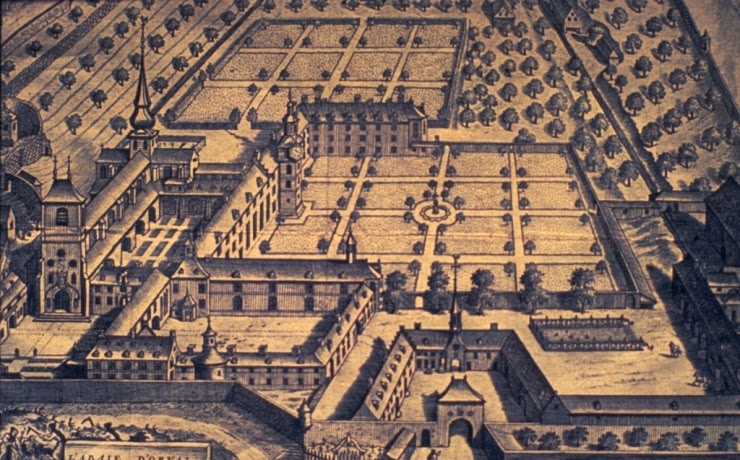
Rachefort Trappistes, located in the Abbey of St-Remy, is located in the southern part of Belgium, and is one of only ten Trappist breweries in the world.  The monks of the abbey began to brew beer around 1595, and like all Trappist breweries, the profits from selling the beer can only be used to support the abbey, or go to charitable causes.
(map of Belgium)
This is a wonderful beer, and like almost anyone that has had it will tell you, probably one of the best I have ever had.  I truly enjoy this style.  It is a nice break from the always available, hoppy beers that are on every supermarket aisle.  If you see it, grab it.  I think I paid about $7.99 for my 11.3oz bottle. Not a bargain by any means, but well worth it, in my opinion.  I'm glad I got it, and I would certainly buy it again.  I look forward to trying the other beers in the Rochefort family. Cheers!
(The Rochefort family of beers)

Abbaye Notre-Dame de Saint-Remy
B-5580 Rochefort
Tel.: (32) (84) 22.01.40


Wednesday, April 23, 2014

St. Bernardus Tripel

Before I get started talking about this fabulous abbey ale, a quick story about how I even ended up at the store looking for an interesting beer for the evening.  I had purchased some wine last week at Beverages & More, and, looking for a deal, I grabbed the cheapest thing I saw in the "5 cent" wine section.  You know the one.  Where you buy one bottle of wine, and the second bottle of the same wine is only 5 cents?  Right, well, apparently, I should actually read the back of the bottle and not just glance at the write up.  I ended up buying a "soft" red wine.  I had never heard of such a thing, so if I did read that, I just glanced over it.  I wasn't in the wine buying mood, I was just getting my girlfriend something so my trips to the store weren't just about me getting more beer. Anyways, "soft" red wines (it was something from Italy believe.  I still don't know.  I didn't even read the label when I was taking it back.) are slightly carbonated, and meant to be served chilled, and presented at a baby shower or something of that nature.  Not exactly what I was looking for. So today, I took it back (with no receipt), and after a couple of irritated looks from the BevMo employees, I got to exchange the wine for something actually drinkable.  This will make my girlfriend happy, and get me out of the wine buying dog house.  Since I was already at the store, it would have been silly to not look around and get something for myself.  And that brings us to our current situation of me telling you about this awesome beer, St. Bernardus Tripel!
This beer pours a beautiful amber color, with just a tint of orange to it.  My pour came out very active, and would have left foam all over the counter had I looked away for a second.  I don't know if that is typical of this beer or not, but it made for an interesting start.  In the glass, this beer is by no means translucent, presumably clouded by the continued secondary fermentation in bottle, common to many Belgian beers of this type.  The aroma is very mild, with a slight smell of banana and sweetness.  That sweetness is definitely noticeable after you put this beer to your lips.  No shortage of residual sugars here.  The higher alcohol percentage (8.0%) is noticeable, but not over powering in any way.  It is very drinkable.  As I got further into this tasty treat, I did have a dry, puckering develop in my mouth, which in turn, put a little bit of a boozy sensation in my throat. Not a bad thing.  I've got nowhere to be and nothing to do other than write up this review.  This is an excellent beer for the present occasion. 

St. Bernardus is located in Watou, in West Flanders, in Belgium.  It's history goes like this: Originally, the Catsberg Abbey Community was located in Godewaersvelde, France.  Strong anti clerical policy in the late 1800's forced them to move a few kilometers to the North, into Belgium. They transformed a farm into the "Refuge Notre Dame de St. Bernard" and began making cheese. In the 1930's, attitudes towards the monks improved, and in 1934, they returned all Abbey activities to France.  A man named Evarist Deconinck took over and expanded the cheese factory at Watou.

After WWII, the Trappist monastery St. Sixtus in Westvleteren was looking for someone to commercialize their beer, and gave the license to the cheese factory, and that was the beginning of the Brewery St. Bernard.  Brewmaster Mathieu Szafranski came from St. Sixtus and brought the recipes and the St. Sixtus yeast strain.  For 46 years, the brewery brewed and sold the beer under the names Trappist Westvleteren, St. Sixtus and Sixtus,  while the monks brewed for themselves and a couple local pubs.  In 1992, the license came to and end.  The brewery kept brewing the same beers, but under a different name, St. Bernardus.  Today, they are imported exclusively by D&V International.

Brasserie St. Bernard
Trappistenweg 23
8978 Watou
BTW BE 0463.544.291
Tel: +32-57-38-80-21